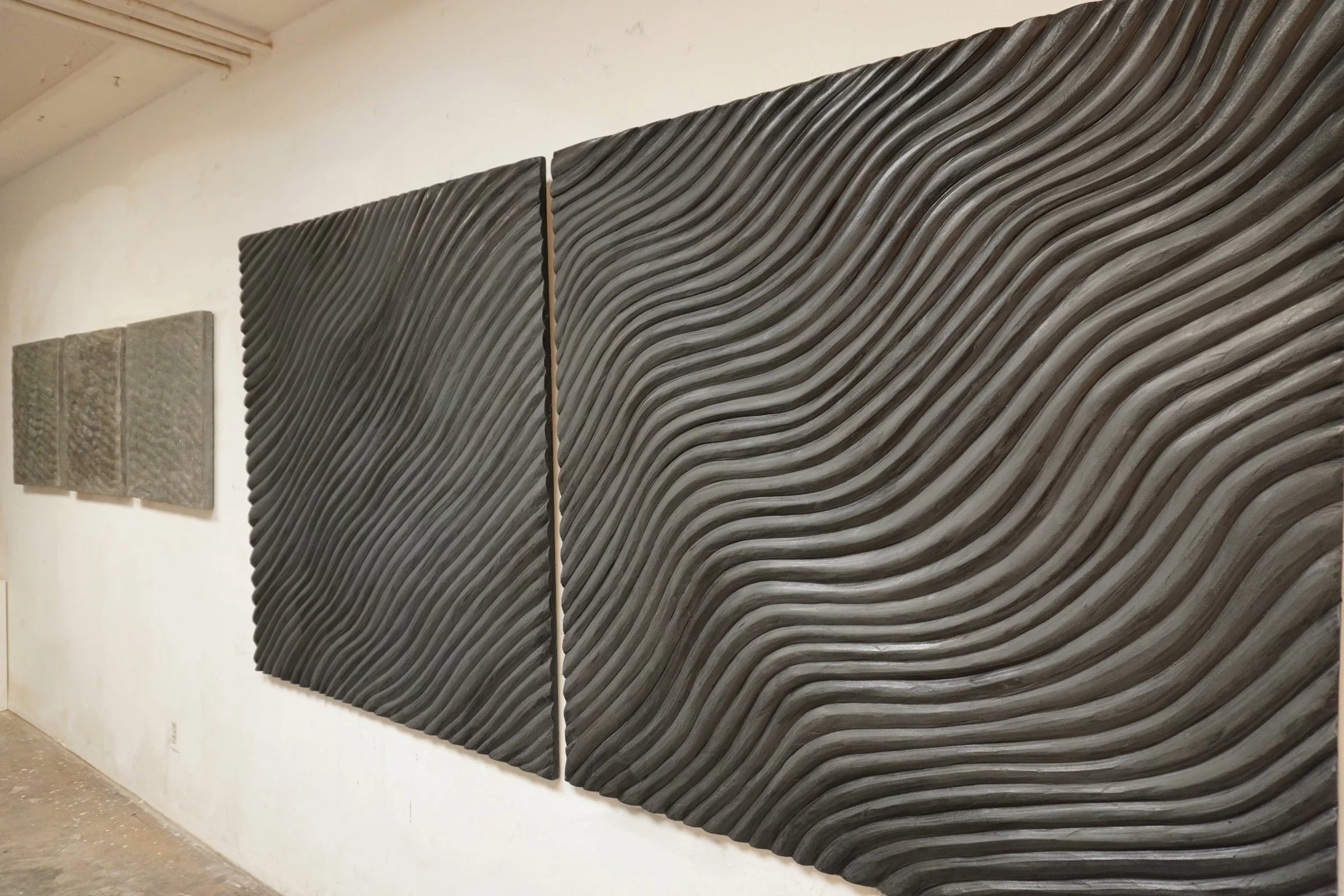
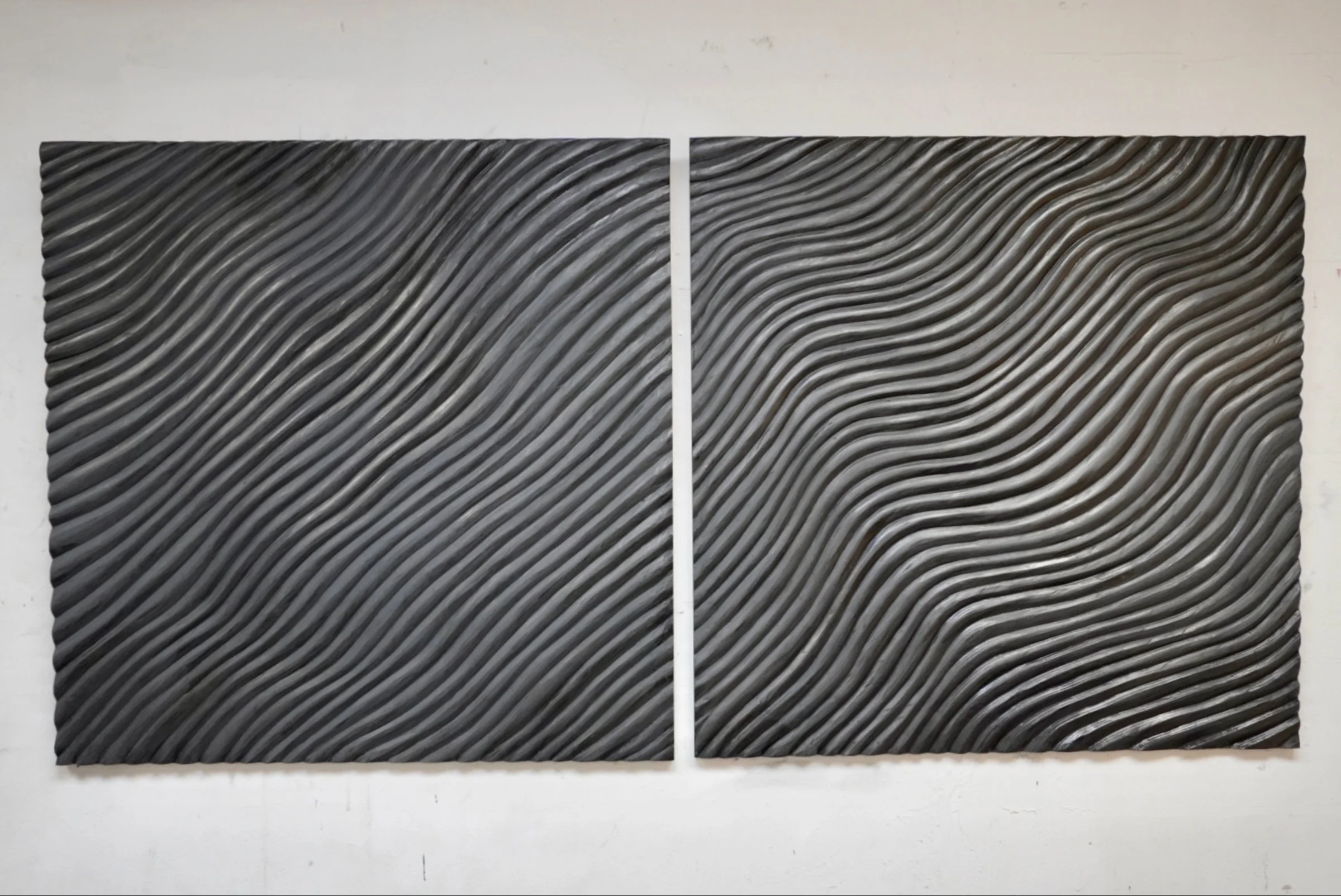
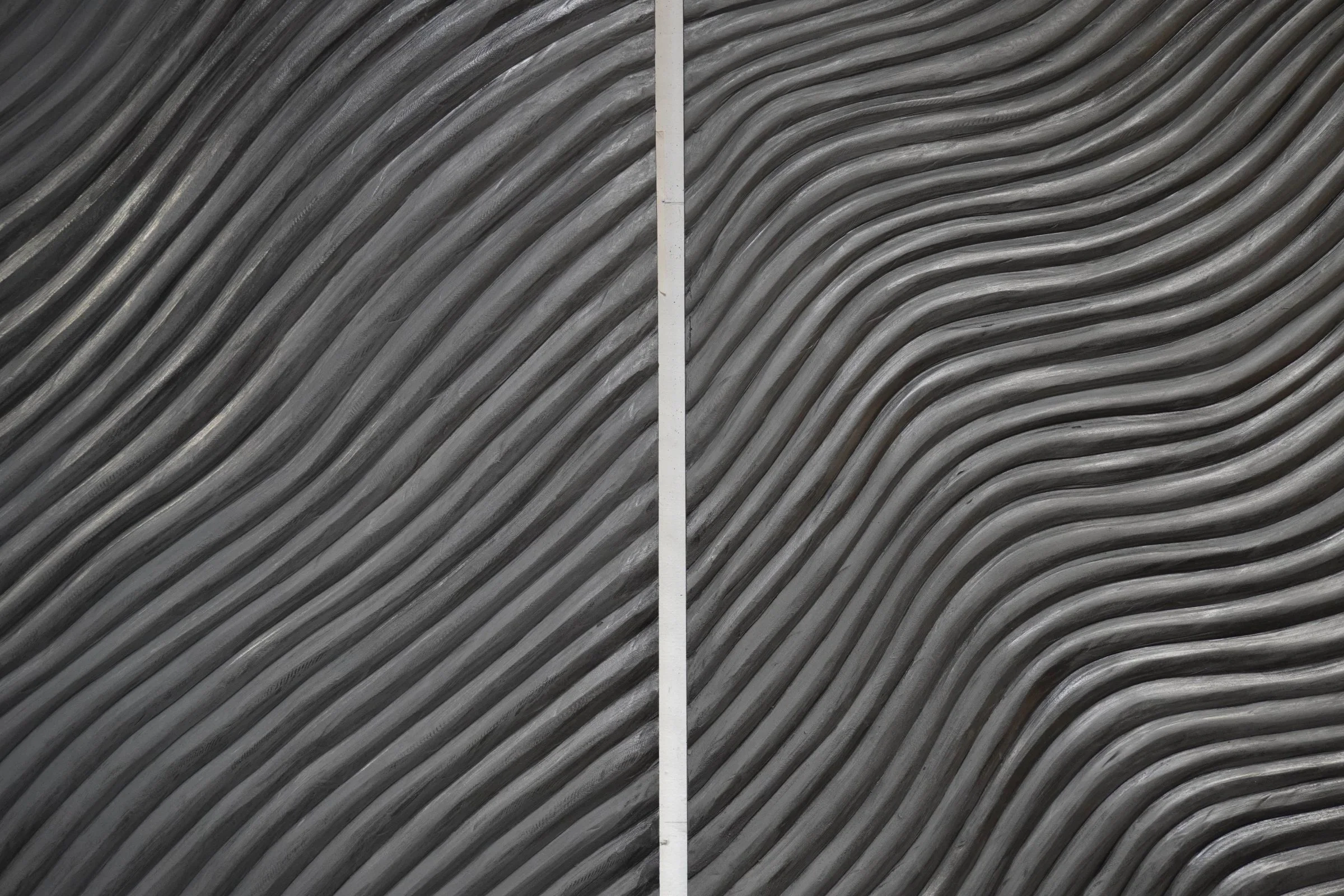
Grounded in close observation of Mauna Loa lava flows and lava beds, this work centers Mauna Loa not as a geological force of destruction but as a life-making force that transforms the land through its movement. The 4 ft × 8 ft plywood diptych does not attempt to mimic pāhoehoe lava; instead, it embodies the richness of black earth and the rippling motion that emerges from Mauna Loa’s flows—speaking to transformation as molten land cools and settles into form. As the lava cools, it solidifies into fertile ground. The blackness of earth left behind from Mauna Loa reclaims and regenerates the land. Layers of black iron oxide and graphite sink into the carved surface, echoing the lava beds I walked on at the base of the volcano, referencing the forces of Mauna Loa.
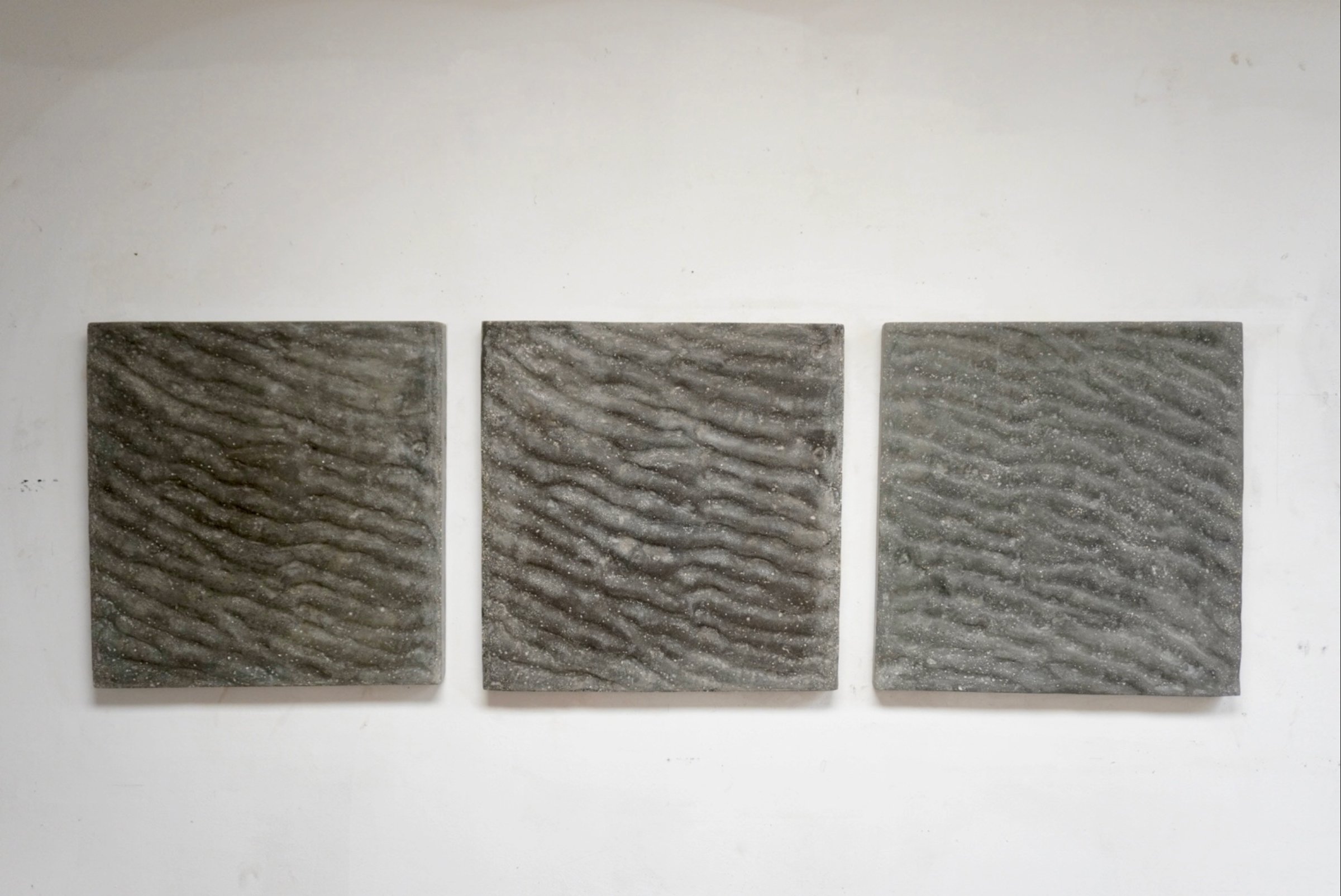
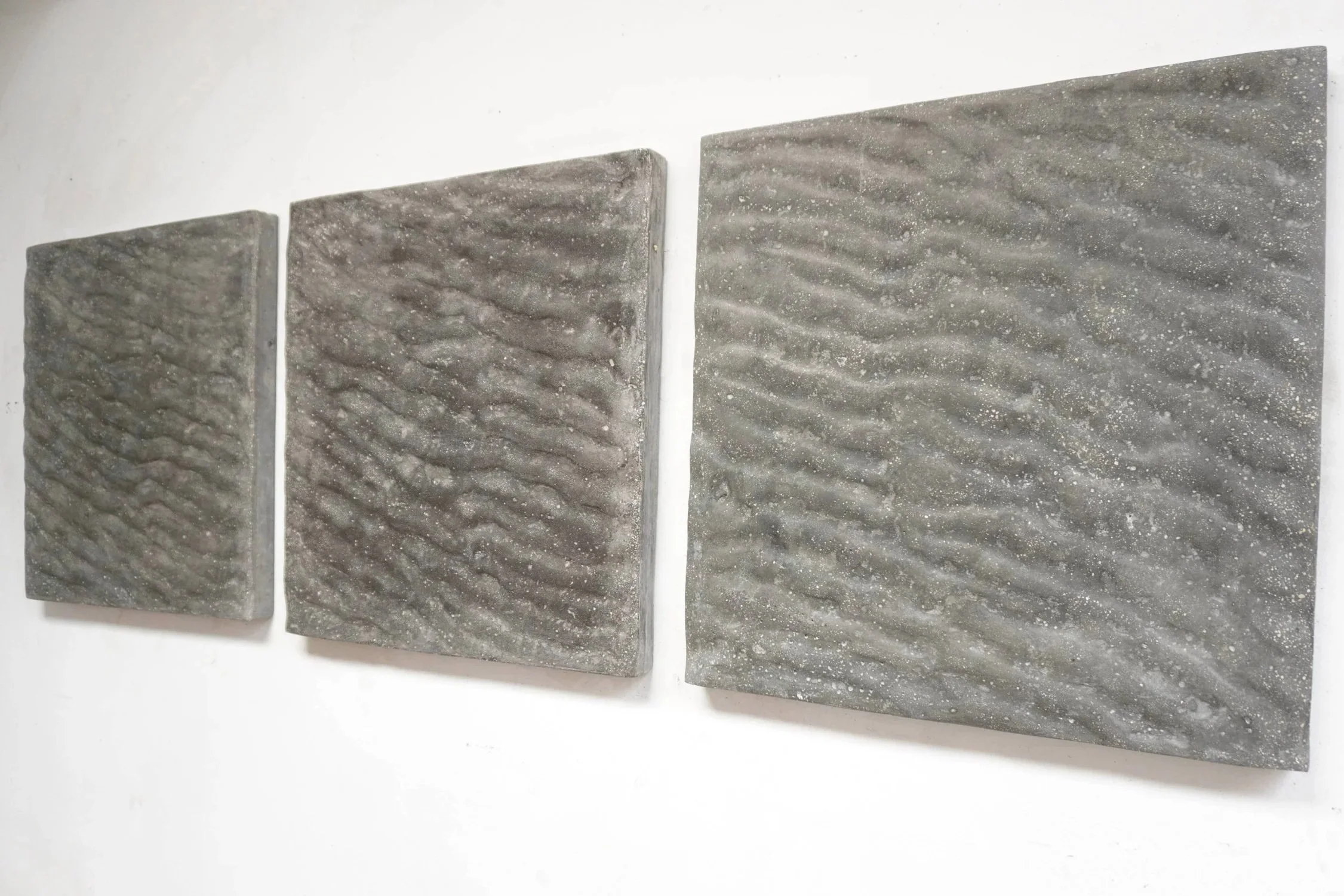
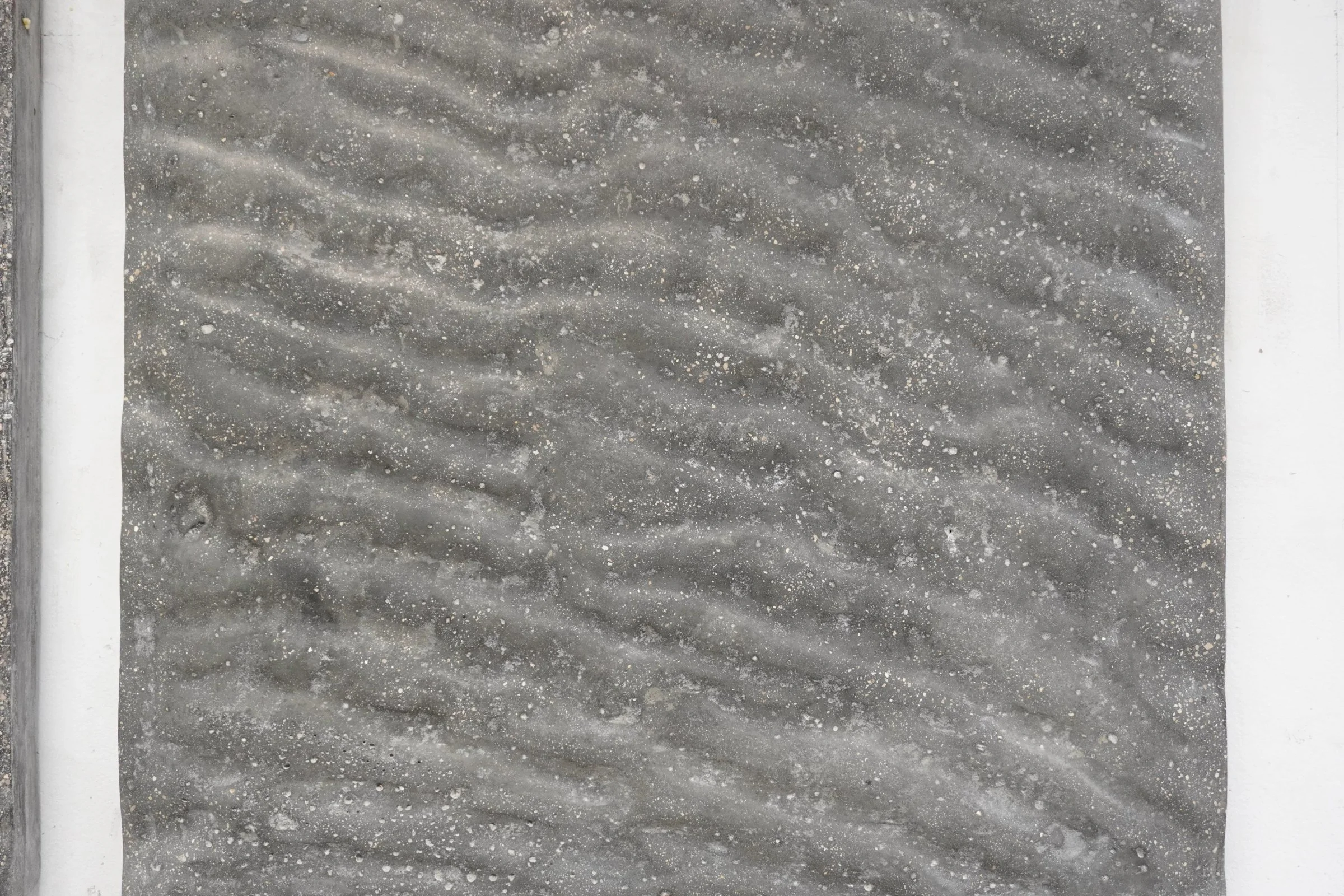
Alongside this interpretation of volcanic language is a 3 ft × 2 ft cement triptych cast from plaster molds taken along the coastline of Kahaluʻu. This piece carries the direct fingerprint of the Pacific Ocean, translating tidal impressions into flowing stone through basalt aggregate.
Together, wood and cement speak through deep time—one shaped through interpretation, the other held as an immediate trace.